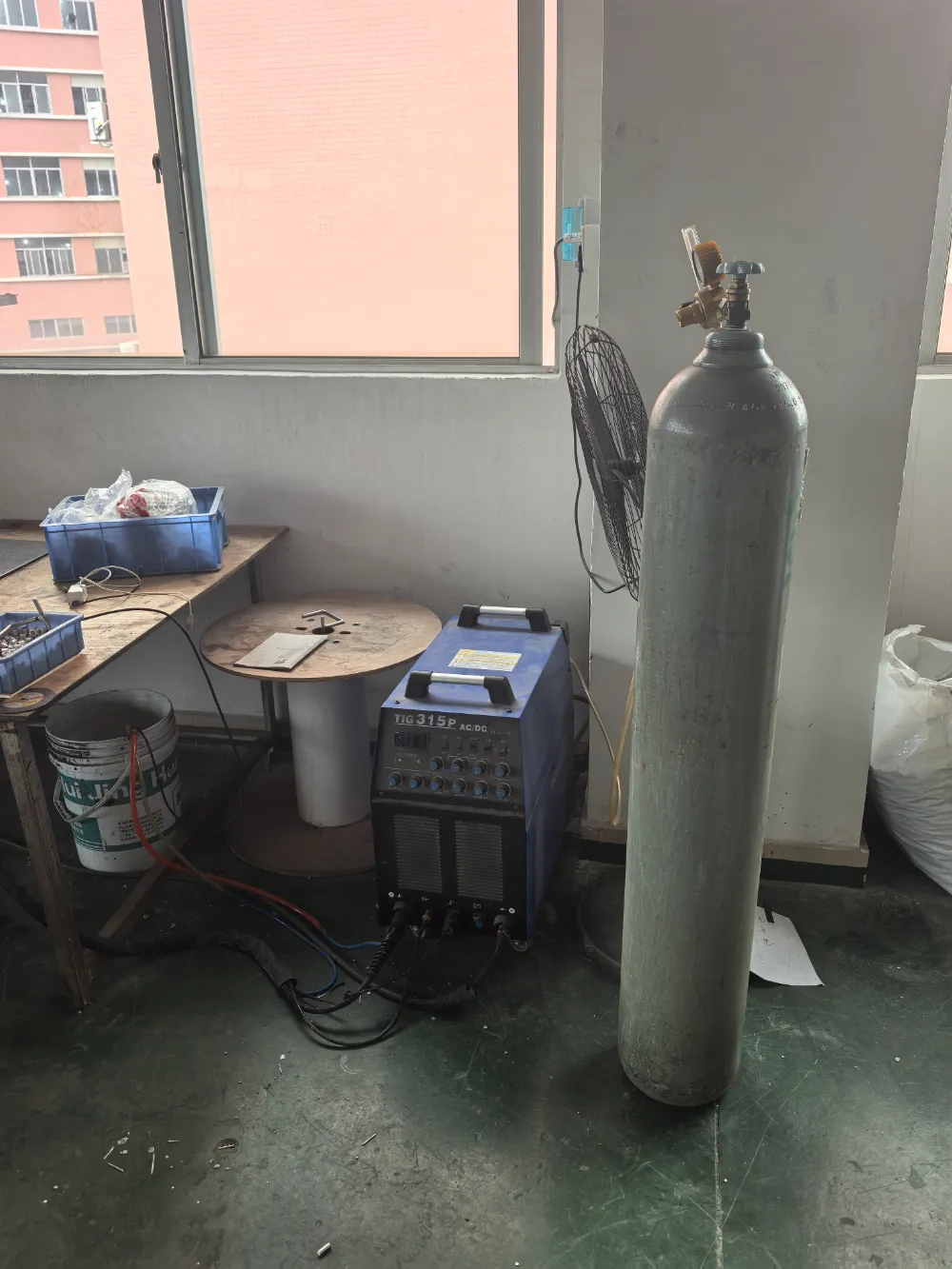
Every crystal branch chandelier that leaves our Guzhen factory begins with one critical process: hand-welding the aluminum frame. Unlike mass-produced fixtures made from stamped steel or injection-molded plastic, our frames are built one at a time by skilled welders using argon arc (TIG) welding. In this article, we take you inside the workshop to show exactly how it is done — and why it matters for the longevity and appearance of your chandelier.
Why Aluminum, Not Steel?
Many budget chandelier manufacturers use steel frames because steel is cheaper and easier to weld with basic equipment. The problem? Steel rusts. Even with paint or plating, any microscopic scratch exposes the steel to humidity and oxidation begins. In hotel lobbies and coastal villa projects — where air moisture is high — rust is not a question of if, but when.
We use aerospace-grade 6063 aluminum for every branch frame. Aluminum is naturally corrosion-resistant. It does not rust. It is also approximately one-third the weight of steel, which makes installation safer and reduces structural load on ceilings — a critical consideration for large-diameter fixtures spanning 1.5 to 2 meters.
The Argon Arc Welding Process
Aluminum is notoriously difficult to weld. Its high thermal conductivity means heat dissipates rapidly, and its oxide layer melts at a temperature nearly three times higher than the base metal. This is why we use Tungsten Inert Gas (TIG) welding with pure argon shielding gas.
Here is how our welders build each frame, step by step:
- Material preparation — Aluminum tubes and rods are cut to precise lengths based on the fixture's design specifications. Ends are deburred and cleaned with acetone to remove any surface oil.
- Jig setup — Each product SKU has a custom welding jig that holds all branch arms in their exact geometric positions. This ensures that every 5011 octagonal chandelier, for example, has identical branch angles and symmetry.
- TIG welding — The welder uses a tungsten electrode to create an electric arc, feeding aluminum filler rod by hand into the molten pool. Pure argon gas flows continuously around the weld point, shielding it from atmospheric oxygen that would otherwise cause porosity and weak joints.
- Visual inspection — Every single weld joint is visually checked for penetration, smoothness, and absence of cracks or undercut. No exceptions. A frame with any questionable weld is rejected immediately.
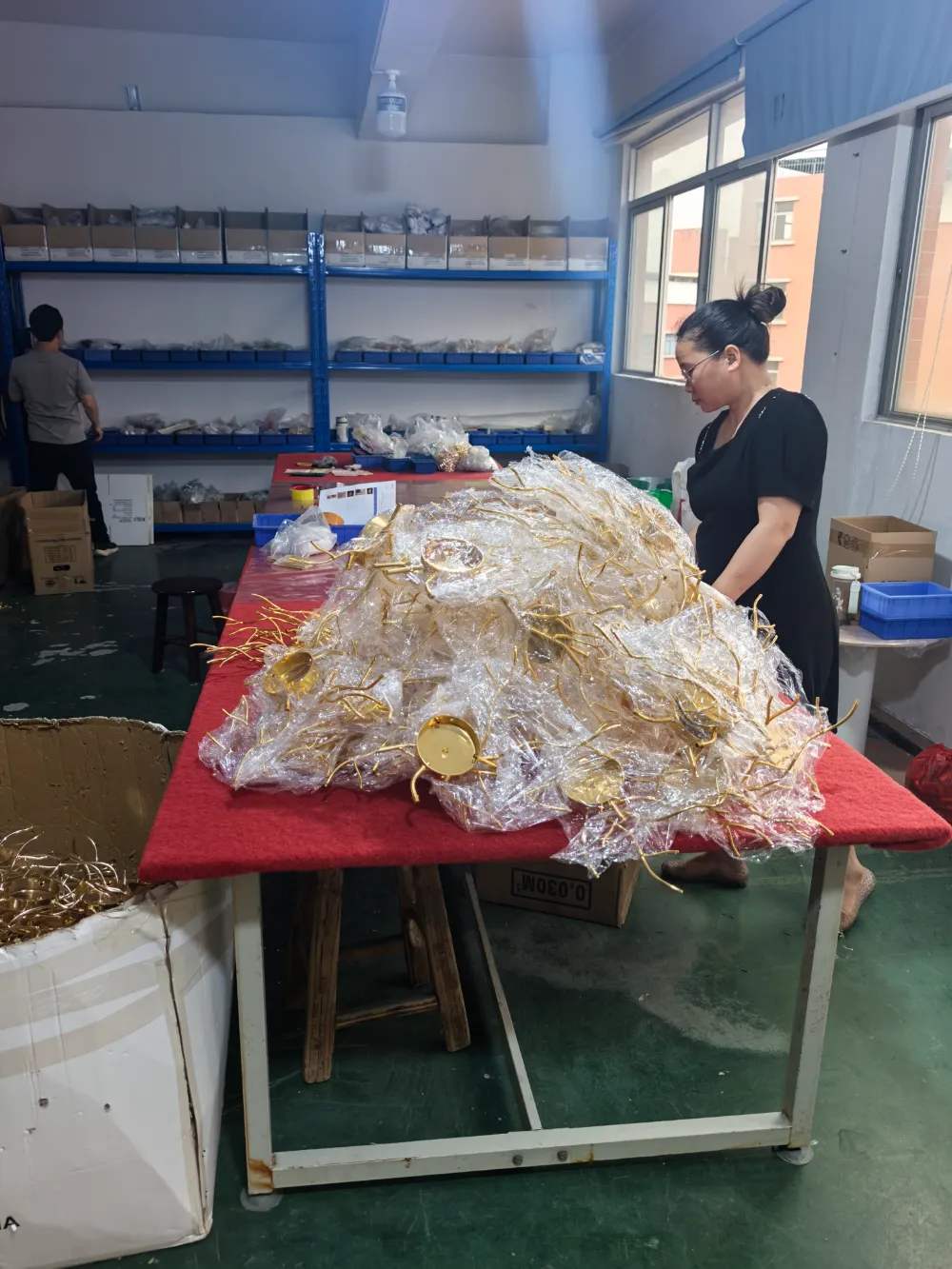
From Welding to Finished Frame: Surface Treatment
A raw welded aluminum frame is structurally sound but visually unremarkable. The next step is surface finishing — and this is where many manufacturers cut corners. Here is our full treatment sequence:
- Surface preparation — The welded frame is sandblasted to create a uniform matte texture, removing any oxidation and creating a surface profile that helps subsequent coatings bond tightly.
- Primer application — An epoxy-based anti-corrosion primer is applied. While aluminum does not rust, the primer adds an additional chemical barrier and provides the ideal base for electroplating.
- Electroplating (gold and chrome finishes) — The frame is submerged in an electroplating bath. For polished gold, a multi-layer process deposits copper, nickel, and finally a 24K-toned gold layer. For chrome, a triple-layer nickel-chrome system produces mirror-like reflectivity.
- Matte finishing (alternative) — For our matte gold and matte chrome options, the frame undergoes a brushing process before plating. This creates a soft, non-reflective surface that is increasingly popular in contemporary European and Japanese hotel designs.
- Anti-oxidation sealant — A clear protective topcoat is applied as the final step. This sealant is the reason we confidently offer a 2-year warranty against finish oxidation.
Why Hand-Welding Beats Machine Welding for Crystal Chandeliers
You might wonder: if robotic welding is so advanced, why do we insist on hand-welding? The answer lies in the organic, branch-like geometry of our designs.
Robotic welding excels at repetitive, straight-line joints — think automobile frames or steel furniture. But the branch arms of our chandeliers curve, twist, and intersect at variable angles. Each joint is slightly different from the last. A human welder can adjust torch angle, travel speed, and filler deposition in real time based on what they see in the weld pool — adjustments that no robot can make without being reprogrammed for every single joint.
The result is a cleaner, stronger, more aesthetically pleasing weld that requires minimal grinding or post-processing. It is slower and more expensive than automated alternatives, but the difference is visible in the final product — and it is one of the first things experienced interior designers and procurement agents notice when comparing samples.
Quality You Can Verify
Every completed frame undergoes a 24-hour electrical aging test before it moves to crystal stringing. The frame is fully wired, powered on, and left running continuously. This catches any latent electrical defects — a loose connection, a faulty lamp holder — before the fixture ever reaches a customer's ceiling.
Want to see the process for yourself? We welcome factory visits from serious wholesale buyers and sourcing agents. Walk the workshop floor, meet the welders, and inspect frames at every stage of production. There is no better way to verify quality than seeing it with your own eyes.
Ready to discuss a custom project or schedule a factory visit? Contact our team — we reply within 24 hours.